![[ai_client_name]](https://joycerey.com/app/themes/joycereycom_2024/assets/images/site-logo-white.svg)
Beverly Hills on screen and in song: How pop culture shaped the world’s image of Beverly Hills luxury
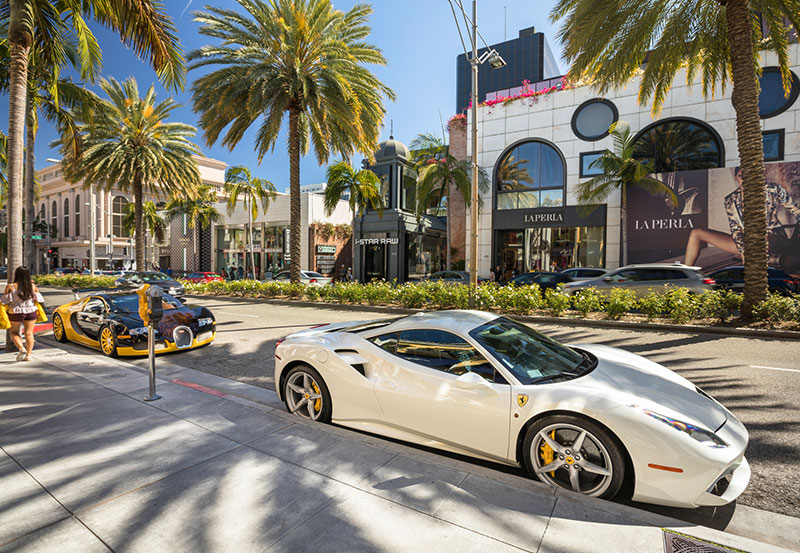
Beverly Hills luxury is shaped as much by its iconic streetscapes and high-end retail as by its landmark homes
Beverly Hills didn’t become a global icon by accident. Long before a visitor ever sets foot on Rodeo Drive, they already feel like they know the city through the decades of film, television, and music. This constant spotlight has transformed this small Southern California city into a universal symbol of success, beauty, and exclusive access.
This kind of cultural fame does more than just create a buzz; it builds a foundation of prestige that travels across borders. Today, the Beverly Hills name is recognized worldwide as the ultimate achievement, and understanding how this neighborhood became a legend is the first step to seeing why its value only continues to grow.
Noteworthy insights from Joyce
|
HOW OLD HOLLYWOOD BUILT THE BEVERLY HILLS MYSTIQUE
The Beverly Hills lifestyle was always beautiful, but it was the movie business that gave the city its famous glow. And as the movie industry grew, so did the city’s reputation for elite living.
Following World War II, the demand for the very best transformed Rodeo Drive into a curated “Fashion Mecca” and the global gold standard for luxury. This cultural prestige and brand of Beverly Hills luxury endured because the glamour of the silver screen had finally found a permanent home.
Hollywood royalty and Pickfair in the 1920s
No story is more central to Beverly Hills than the Pickfair mansion. When movie stars Mary Pickford and Douglas Fairbanks built this estate, they established the visual language of the city—defined by grand homes and large private yards—and started a trend of Hollywood’s biggest names building lavish mansions in the area.
Because Pickford and Fairbanks were two of the largest stars of the silent film era, their presence changed how people saw the city. It was no longer just a place to live—it became the official home of Hollywood royalty.
The hotel that spawned a luxury city
Before Beverly Hills was even a city, it was a destination that was defined by The Beverly Hills Hotel. Opened to the public on May 12, 1912, the Pink Palace served as a high-end basecamp for guests scouting the area for their own grand estates.
As the industry’s biggest stars and studio bosses began gathering at the Polo Lounge and poolside cabanas, the surrounding hills and canyons were instantly reimagined as the ultimate residential space. This is why the blocks closest to the hotel—especially those North of Sunset Boulevard—became the city’s first true trophy properties.
A legacy of architecture and privacy
As Beverly Hills became a magnet for the rich and famous, small houses were soon replaced by grand estates. These homes were built to show off the status of the stars who lived in them, establishing several iconic architectural styles that still define the city today:
- Spanish Revivals captured the romance of early California with sprawling designs.
- French Chateau brought a taste of Europe to the hills, using tall rooflines and limestone to signal world-class success.
- Georgian Manors were a more formal choice, using balanced brick and stone to show the power of the industry’s top leaders.
THE SILVER SCREEN AND THE MAKING OF AN ICON
Very few places on earth have been branded as effectively—or as consistently—as Beverly Hills. Because its streets and hotels have played starring roles in movies for decades, they have transformed from simple locations into universal symbols of success. This turned Beverly Hills luxury into a living brand, where the on-screen set became a real-life goal that audiences carried into their own expectations.
The art of high-end hospitality
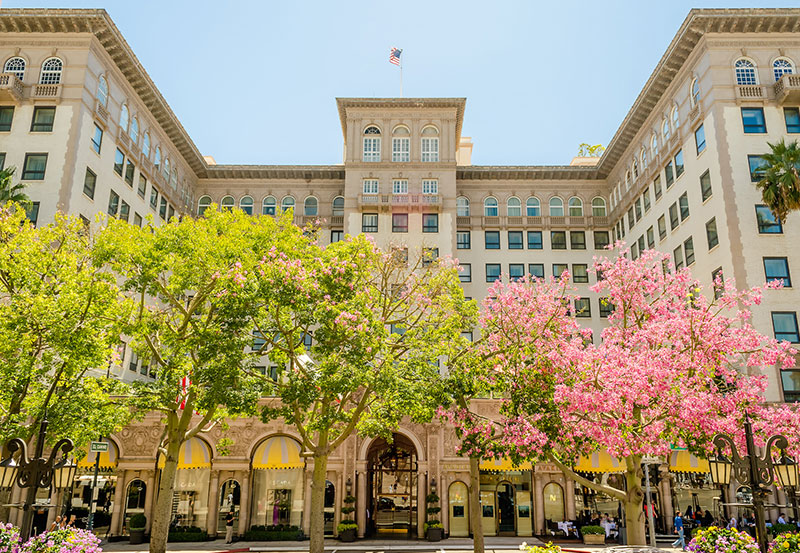
The Beverly Wilshire helped turn Beverly Hills luxury into a global image, especially after its starring role in Pretty Woman (1990).
The Beverly Wilshire sits right at the famous corner of Wilshire Boulevard and Rodeo Drive. Its history is deeply tied to Hollywood, serving as a backdrop for countless films, most notably as the main setting for Pretty Woman (1990).
From the iconic scenes of Vivian in the Presidential Suite’s marble bathtub to her walk through the grand lobby, the hotel became a symbol of the “Cinderella story” come to life. This helped frame the Beverly Hills lifestyle as a place where anyone’s grandest fantasies could actually happen.
In fact, the Beverly Wilshire still embraces its starring role today. Through the “Pretty Woman for a Day” experience, guests can stay in the movie’s signature suite and live out the exact brand of Beverly Hills luxury seen on screen.
A complete aspirational ecosystem
Beyond the shopping, the Beverly Hills culture is marketed as an entire world filled with elite schools, luxury cars, and specific social rules. This lifestyle was famously captured in Clueless (1995). It turned daily routines—like high school social groups and cruising down Rodeo Drive—into a dream for new generations.
The city recently celebrated this legacy for the film’s 30th anniversary by naming July 19th “Clueless Day”. The celebration brought the movie to life with an outdoor screening at La Cienega Park and the transformation of a luxury suite at L’Ermitage into a tribute to Cher Horowitz’s famous yellow-plaid closet.
The screen-ready North Side
When Axel Foley drives into town in Beverly Hills Cop (1984), his beat-up Chevy Nova serves as a moving punchline against the perfect, palm-lined streets that define Beverly Hills luxury. This cinematic culture clash shows a city that follows its own rules—a hyper-safe, orderly world where every lawn and storefront already looks like a movie set waiting for the cameras to roll.
This built-in “stage quality” is exactly why Beverly Hills luxury has been so easy to market for over a century—the reality of the neighborhood is already almost indistinguishable from the Hollywood dream.
TELEVISION THAT TURNED THE ZIP CODE INTO A BRAND
While the silver screen and pop culture made Beverly Hills feel glamorous, television made it feel personal. Over the years, the small screen took the 90210 lifestyle out of the world of fantasy and brought it directly into our living rooms.
The power of a postal code
During its ten-year run, Beverly Hills, 90210 (1990-2000) did something amazing: it turned five digits into a global symbol for wealth. While the show was a teen drama, it worked as a massive branding tool that made the neighborhood’s lifestyle easy for a global audience to recognize and understand.
By making the city a star of a weekly series, the show stripped away the distant Hollywood myth and replaced it with a familiar world. This changed a simple zip code into a lifestyle that an entire generation could recognize instantly.
From scripted dreams to living reality
While scripted dramas built the dream, reality television turned extreme luxury into something we see every day. Shows like The Real Housewives of Beverly Hills (2010-present) and Million Dollar Listing Los Angeles (2006-2024) put massive estates right in front of a global audience. This took the mystery away from the mansion and it turned high-end architecture into a clear map for a successful life.
This change made Beverly Hills luxury the worldwide standard for status. Even when these shows aren’t filmed directly in the city, they teach people everywhere how to recognize the signs of a wealthy California lifestyle.
THE SOUND OF STATUS: LYRICS AND 90210
A songwriter only name-checks a location when it carries instant, universal weight. And for decades, Beverly Hills has been the go-to audio cue for elite living. In song lyrics, the city represents the very top of fame and the dream of reaching the highest social level.
A chantable symbol of the good life
Weezer’s song “Beverly Hills” is a great example of how the city’s name works as a shortcut for wealth. By singing about “preppie girls” and “fancy cars” that felt just out of reach, the song showed the big difference between regular people and the 90210 elite. This playful outsider view turned the city’s name into a shout-along anthem for anyone who ever felt like they were on the outside looking in.
A proof of arrival
In modern music, Beverly Hills serves as a literal receipt for success. While Weezer’s “Beverly Hills” framed the lifestyle as a distant, almost unreachable dream, today’s artists use the neighborhood to signal that they have officially arrived.
That shift is clear in the way current icons use the zip code as a backdrop for their own stories of achievement. Whether it’s the atmospheric climb described in Travis Scott’s “90210” or the luxury-laden verses of artists like Drake and Post Malone, the sentiment remains the same: the 90210 brand is the ultimate sign of having “made it.”
WHAT THE BEVERLY HILLS LUXURY MARKET ACTUALLY RUNS ON
While Beverly Hills in pop culture creates a buzz, it doesn’t close a real estate deal. The people buying and selling the most famous homes here care about things more practical than what they see on screen. The true value of the neighborhood is usually built on these key factors:
- The power of private sales
One of the biggest parts of Beverly Hills luxury is something the cameras rarely show: the off-market deal. Because there are so few homes available and high-profile sellers value their privacy, many of the best properties are sold quietly. - Moving past the surface
In movies, Beverly Hills is often just about shopping bags and shiny cars. In real life, serious buyers look for things that last: the quality of the land, the home’s history, and great architecture. A home’s value grows when its story goes deeper than just looking good on the outside. - Architecture that commands respect
Beverly Hills remains an icon because of its showcase of world-class design. You can find everything from grand, historic estates to sharp, modern homes. This variety ensures the neighborhood stays relevant, proving that while trends change, the city’s high standard for living is the main draw.
WHERE THE GLAMOUR ACTUALLY LIVES
While the world sees Beverly Hills as one big status symbol, the city has many different sides. From formal estates and dramatic mid-century designs to quiet, hidden corners, the character of each area defines what it’s actually like to live here.
|
Area |
Signature feel |
Pop culture association |
What it offers buyers |
|
The Flats |
Classic estate living with wide streets and large lots |
Old Hollywood glamour and timeless Beverly Hills luxury |
Scale, curb appeal, and a polished residential setting |
|
Trousdale Estates |
Sleek, architectural, and distinctly mid-century |
A cinematic version of modern California glamour |
Design pedigree, views, and a sharper modern identity |
|
North of Sunset |
Quiet, secluded, and privacy-driven |
The behind-the-scenes side of Beverly Hills prestige |
Privacy, larger properties, and low-profile living |
|
Near Rodeo Drive and luxury hotels |
Central, recognizable, and brand-forward |
The on-screen Beverly Hills image most people know |
Proximity to shopping, dining, hotels, and iconic addresses |
|
Estate pockets near the Golden Triangle |
Upscale, convenient, and socially connected |
The lifestyle of Beverly Hills culture |
Residential prestige with quick access to core amenities |
THE POWER OF THE POP CULTURE HALO
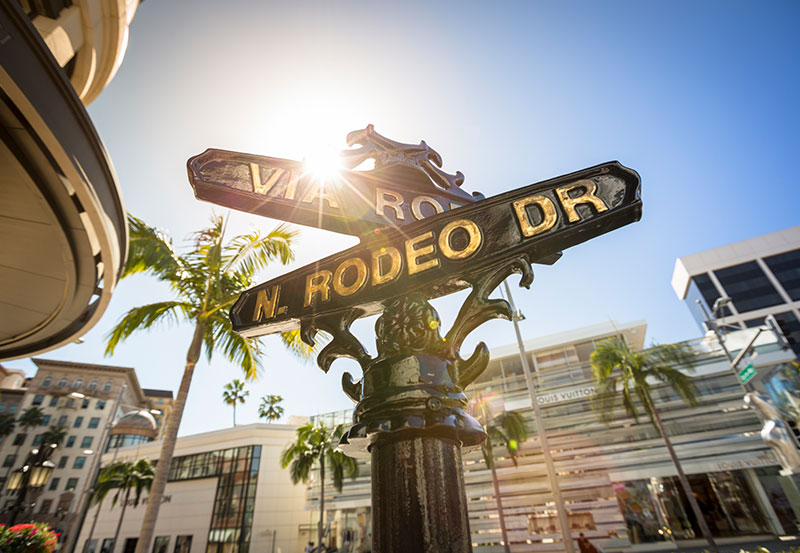
Rodeo Drive helped turn Beverly Hills luxury into a global symbol of status, style, and visibility.
For the entire world, Beverly Hills needs no introduction. Decades of movies and music have created a halo—a global fame that tells the story of what it means to live here. And because everyone already knows the location, you’ll never have to explain why a specific address in this area is important.
This constant exposure turns the neighborhood into a safe bet. While a famous name doesn’t replace a great house, it adds a layer of protection to its value. When you pair a private estate with a zip code that has symbolized success for generations, the property becomes more than real estate—it becomes a trophy.
Frequently asked questions
|
YOUR ENTRY POINT INTO THE 90210 LIFESTYLE
Beverly Hills didn’t become an icon by accident. The movies made it glamorous, television made it familiar, and music turned it into the ultimate symbol of the high life. This fame only lasts because the city delivers on the promise, offering the privacy, world-class architecture, and prestige that the world’s most discerning buyers still demand.
With over $6 billion in career sales, I use my decades of experience to help you navigate the quiet, off-market world where the most significant deals happen. My goal is to ensure you have the inside track on the city’s best properties while protecting your privacy and interests at every turn.
If you’re ready to explore your own chapter in this stored neighborhood, you can reach me, Joyce Rey, at 310.291.6646 or via email.

Browse our latest news and updates below