
![[ai_client_name]](https://joycerey.com/app/themes/joycereycom_2024/assets/images/site-logo-white.svg)
Homes That Heal: The Rise of Wellness-Centric Interiors
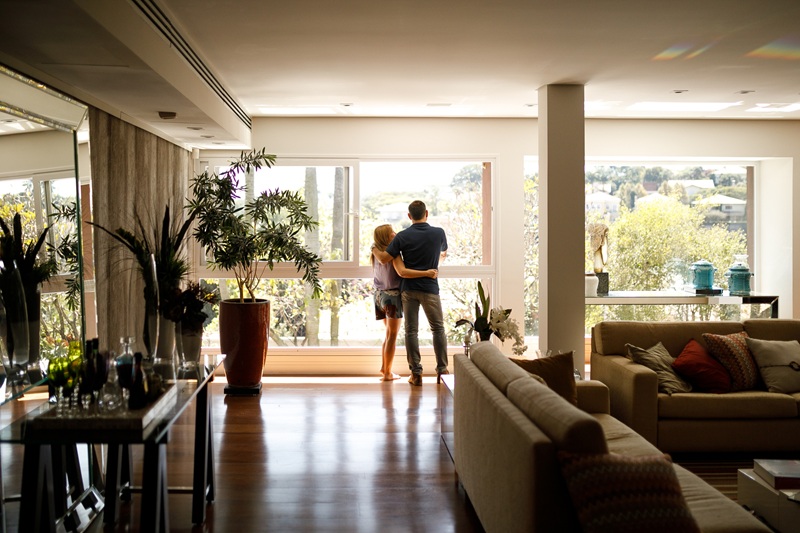
Wellness interior design started out as a preference. Today, it’s a necessity for many.
The modern home is no longer defined solely by square footage, finishes, or architectural pedigree. Increasingly, it is measured by how it makes us feel.
Table of Contents:
- Noteworthy Insights From Joyce
- Why Wellness is Reshaping Modern Living
- The Pillars of Wellness-Centric Interiors
- Room-By-Room: Designing for Measurable Well-Being
- Outdoor Environments: Extending Wellness Beyond the Walls
- The Long-Term Value of Wellness-Centric Homes
- Frequently Asked Questions Wellness-Centric Interiors
- The Next Step
Across Beverly Hills and beyond, homeowners are asking a different question: does my home support my well-being? From air quality and lighting to materials and layout, design decisions are shifting toward spaces that nurture physical health, mental clarity, and emotional balance. The result is a growing movement toward wellness interior design—an approach that prioritizes human experience as much as visual beauty.
|
WHY WELLNESS IS RESHAPING MODERN LIVING
For decades, luxury in home interior design was defined by visible opulence: marble countertops, exotic woods, statement lighting, and architectural grandeur. Health was assumed, beauty was prioritized, and comfort was aesthetic.
The early foundations
The first meaningful shift began early in the early 2000s when green building certifications like LEED introduced sustainability into mainstream residential conversations. At the time, environmental responsibility was the focus. Wellness, though related, was secondary.
By the mid-2010s, a more personal awareness began to take hold. The WELL Building Standard, launched in 2014, formally connected design decisions to human health—air quality, water purity, lighting, nourishment, and comfort. Developers and architects started to consider how buildings influenced sleep, stress levels, and cognitive performance. Wellness was emerging, but it was still considered progressive.
2020: The turning point for wellness-centric homes
The COVID-19 pandemic accelerated what had been a gradual evolution. Homes became offices, schools, gyms, and sanctuaries overnight. Indoor air quality was no longer an upgrade—it was urgent. Outdoor access became essential. Acoustic privacy and natural light took on measurable psychological importance. What had once been a preference became a necessity.
During this period, wellness interior design moved beyond trend status. Homeowners began investing in advanced HVAC filtration, whole-home water purification, flexible layouts, and circadian lighting systems. The residence was no longer just shelter, but also an infrastructure for health.
Six years later, wellness interior design is no longer a niche. It reflects a broader cultural recalibration toward longevity and quality of life. Air filtration, low-VOC materials, acoustic insulation, spa-level bathrooms, and restorative outdoor environments are increasingly viewed as structural considerations rather than decorative enhancements.
THE PILLARS OF WELLNESS-CENTRIC INTERIORS
If the past decade reframed the home as a health-supporting environment, the question now becomes: what defines a truly restorative residence?
At its highest level, wellness interior design rests on four foundational pillars: air, light, material integrity, and sensory balance. These elements operate quietly, often invisibly, yet they determine how a space feels over time.
-
Air Quality
Clean air is the most essential—and most overlooked—luxury.
The Environmental Protection Agency (EPA) has long reported that indoor air can be two to five times more polluted than outdoor air. This is largely due to off-gassing materials, cleaning products, and insufficient ventilation. As a result, the most advanced homes now often integrate medical-grade HEPA filtration, energy recovery ventilators, and humidity control systems directly into architectural planning.
Harvard’s “Healthy Buildings” research findings further reinforce what many have experienced firsthand: improved air quality correlates with sharper focus and greater cognitive clarity.
-
Light
Light governs more than just visibility. It also regulates the body’s internal clock.
Research in circadian biology has demonstrated that exposure to cooler light in the morning supports alertness. Meanwhile, warmer tones in the evening promote melatonin production and deeper sleep. When lighting conflicts with our body’s natural rhythm, fatigue and mood disruption may follow.
In wellness interior design, tunable lighting systems that adjust throughout the day are often incorporated to echo natural sunlight patterns. Daylight access, indirect illumination, and high-quality LEDs are also employed to help reduce glare and visual strain, all while supporting biological balance.
-
Material Integrity
What surrounds us physically also surrounds us chemically. The EPA has identified volatile organic compounds (VOCs) from paints, adhesives, and engineered woods as contributors to indoor air quality concerns. While often imperceptible, these emissions can affect comfort over time.
As a result, designers committed to wellness interior design increasingly specify low-VOC paints, natural lime plasters, solid woods, and organic textiles. Natural stones, untreated materials, and breathable finishes create interiors that feel grounded and clean.
-
Acoustic Harmony
Finally, sound also has a measurable impact on our physiology. The World Health Organization (WHO) has linked prolonged noise exposure to elevated stress levels and disrupted sleep patterns. Even subtle background noise can influence cortisol levels and cognitive performance.
Thoughtful acoustic design—through layered textiles, upholstered furnishings, solid-core doors, and advanced glazing—helps create interiors that feel composed rather than reactive. As a result, rooms become quieter and rest deepens.

Solid wood and natural stone are some of the preferred materials when it comes to wellness-centric interior design.
ROOM-BY-ROOM: DESIGNING FOR MEASURABLE WELL-BEING
Well-executed wellness interior design is specific to function, since each space typically supports a different biological system or two. The following are tips on how you can incorporate wellness in your home’s essential areas.
The Kitchen
Your kitchen is one of the most chemically active rooms in the home. Cooking generates particulate matter and nitrogen dioxide—particularly from gas appliances—while cleaning agents and cabinetry can introduce additional airborne compounds.
Because this space directly affects both inhalation and ingestion, its design plays a measurable role in overall indoor environmental quality. Here are some strategies and upgrades to keep your kitchen functional and wellness-focused:
- Eliminate combustion and improve ventilation. Replace gas cooktops with induction to reduce nitrogen dioxide and particulate emissions. Pair this with a high-capacity, externally vented range hood to remove airborne particles immediately. And if you would like to keep the look of a traditional gas range, this 30-inch Liberty induction range from Thermador will help you maintain that aesthetic.
- Upgrade your water infrastructure. Install under-sink reverse osmosis or whole-home filtration to reduce chlorine, heavy metals, and sediment, as well as to improve taste and clarity. Confirm that refrigerator and ice lines are connected to filtration as well; it’s often overlooked.
- Specify low-emission cabinetry and finishes. Choose no-added-formaldehyde cabinet cores and low-VOC paints, stains, and adhesives. They may not change how your kitchen looks, but it can change how it feels over time. Natural stone, stainless steel, and solid hardwood surfaces tend to introduce fewer synthetic binders than heavily engineered materials.
- Monitor air quality when possible. Smart indoor air monitors provide real-time data during cooking, allowing you to adjust ventilation as needed. One great example is the IQAir AirVisual Pro Indoor Monitor, which was recognized as the best overall air quality monitor by Wired.
The Bedroom
If there is one room that directly determines your long-term well-being, it’s the bedroom. Sleep affects the strength of your immune system, as well as your cognitive clarity, metabolic balance, and emotional regulation. Yet, it’s often treated as a design afterthought.
In a properly executed wellness interior design strategy, the bedroom is approached as a controlled environment. And these design considerations make a measurable difference:
- Protect the darkness. Exterior light pollution, hallway glow, and small electronic indicators all interrupt sleep cycles. Consider installing blackout window treatments and thoughtful lighting placement—they both make a noticeable difference.
- Let lighting soften in the evening. Cooler light has its place during the day. But at night? Warmth matters. Dimmable, warm-toned lighting supports the body’s natural transition toward rest, helping you and the rest of your household gradually wind down towards bedtime.
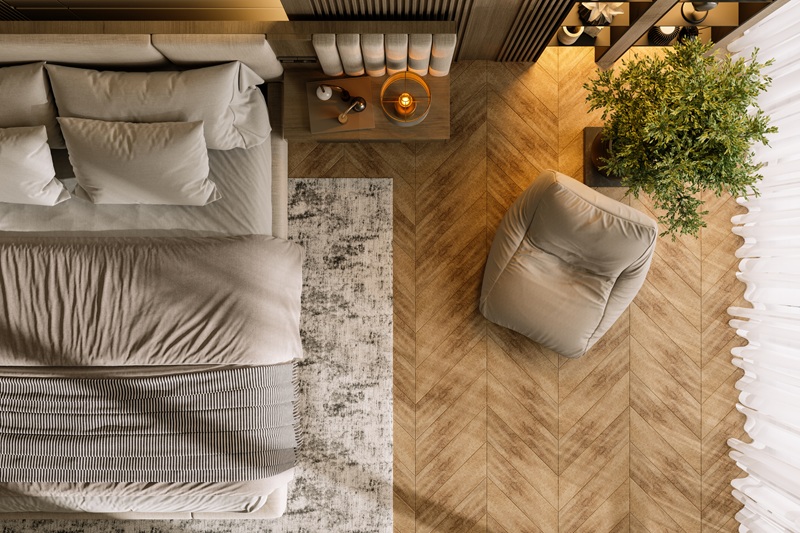
Dimmable warm lighting, window treatments, and natural fabrics will all help you sleep better at night.
- Reduce sound intrusion. In Beverly Hills, even properties set back from the street can experience early-morning landscaping crews, distant traffic along Sunset or Wilshire, or neighborhood activity that carries at night.
Solid-core doors, layered textiles, and properly sealed windows create a level of quiet that supports deeper, uninterrupted sleep. The difference is noticeable once the room is properly insulated from its surroundings.
- Keep temperatures consistent. Aside from the fact that temperatures fluctuate throughout the night, larger estates also experience uneven cooling or heating between levels or wings. Stable, quiet climate control is worth the investment as it will ensure consistency throughout the night, regardless of the season or where your bedroom is located in the property.
- Choose materials you can live with comfortably. Natural fabric, solid wood, and low-emission finishes shape the environment in ways that aren’t immediately visible, but become evident over time. For instance, linen breathes (and is perfect for Beverly Hills). Solid oak ages with character rather than breakdown.
These are subtle distinctions, but in a bedroom—where you spend a third of your life—they matter more than most people realize.
The Bathroom
If the bedroom determines how you sleep, the bathroom determines how you recover.
In Beverly Hills, primary baths are often generous in scale. But size alone doesn’t create restoration. Functionality does. A well-designed bathroom should help the body recalibrate at any time of the day. Here are refinements that make a meaningful difference in this space:
- Filter the water you shower in. Los Angeles municipal water is treated responsibly, but it carries chlorine and dissolved minerals that can leave your skin dry. Whole-home filtration or dedicated shower filters soften the feel of water and reduce chemical exposure in steam environments.
On a related note, choose materials suited to mineral-rich water. Natural stone performs beautifully, but in areas with harder water, it should be sealed properly to prevent spotting and long-term etching. Porcelain alternatives can offer similar visual appeal with lower maintenance in certain applications.
- Install steam with ventilation designed for SoCal humidity patterns. Steam showers are popular in Beverly Hills luxury real estate. But without proper exhaust capacity, moisture can linger, especially in larger bathrooms with high ceilings. And when moisture lingers, mold can develop. Ventilation should clear humidity quickly and quietly to protect both air quality and stone finishes.
- Add radiant heat in larger suites. In multi-level homes, temperature can vary between floors. Radiant flooring stabilizes warmth underfoot without introducing forced-air movement, which can feel drying in already low-humidity winter months.
- Account for natural light exposure. Many Beverly Hills baths incorporate large windows or skylights for a truly spa-like experience. While beautiful, direct sun can increase heat gain. Consider glazing that manages UV exposure while preserving brightness.
The Living Room
The living room often carries the architectural signature of the home. Expansive glazing, double-height ceilings, and open floor plans are common, particularly in hillside properties or estates on the Flats designed for indoor-outdoor entertaining.
But large volumes and generous glass introduce variables: heat gain, glare, sound reflection, and shifting air quality. Here are some changes that can help you keep the space relaxing and composed:
- Manage SoCal sunlight deliberately. South- and west-facing glass in Beverly Hills can generate significant heat, especially during late afternoons. Performance glazing, motorized shades, and thoughtfully designed overhangs reduce glare and overheating while preserving natural daylight.
- Balance acoustics in open-plan layouts. Stone floors, high ceilings, and large panes of glass also amplify sound. Layered textiles, upholstered seating, wool rugs, and discreet acoustic treatments soften reverberation and create a more settled atmosphere.
- Prepare for fluctuating outdoor air quality. Hillside and canyon-adjacent homes may experience dust or particulate shifts during dry, windy periods. High-performance HVAC filtration can help you maintain interior air stability even when exterior conditions change.
- Define seating zones with intention. In expansive rooms, furniture placement matters. Clear pathways reduce visual tension, while grouped seating areas prevent sound from dispersing across the entire volume.
- Control cross-ventilation carefully. Indoor-outdoor living is central to the Beverly Hills lifestyle. But open pocket doors can introduce pollen, dust, and particulates—especially if your property is surrounded by canyon vegetation. Integrating ventilation systems that compensate for open-air flow will help you preserve the interior quality of your home.
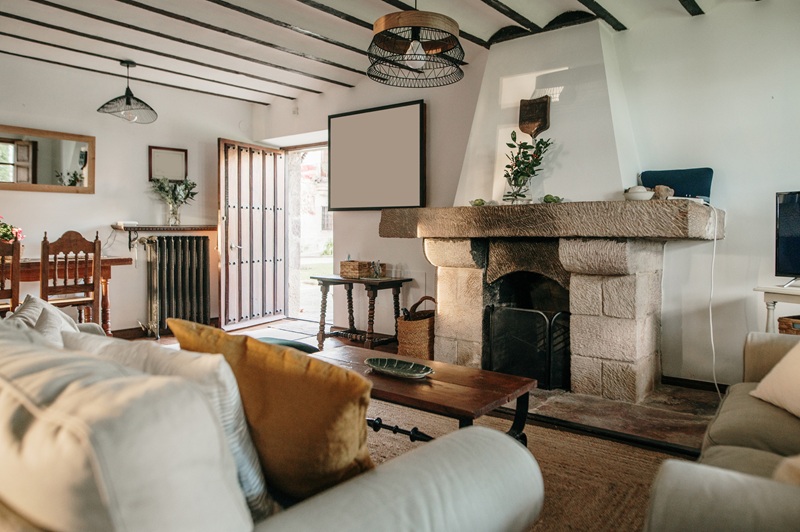
Living rooms have to deal with several variables, including heat gain and shifting air quality.
OUTDOOR ENVIRONMENTS: EXTENDING WELLNESS BEYOND THE WALLS
One of the best things about living in Beverly Hills is that you can enjoy your outdoor space nearly year-round. The inherent location of the city—plus the climate—already contributes to overall wellness, but you can do more to ensure your immediate exterior environment always feels calming.
- Study sun patterns before committing to layout. South- and west-facing terraces receive prolonged afternoon heat. Strategic shade structure, pergolas, mature trees, and retractable canopies allow you to enjoy daylight without excessive exposure.
- Create microclimates within larger lots. On expansive estates—particularly in the hills—wind and temperature can shift dramatically between elevations. Layered landscaping, hedging, and architectural screening help stabilize these areas and reduce harsh wind flow.
- Incorporate movement paths, not just seating areas. Wellness outdoors isn’t limited to lounging. Walking loops, garden paths, and structured courtyards encourage low-impact movement without you needing to leave the property.
- Use water features strategically. In denser sections of Beverly Hills or near busier corridors, properly positioned water elements provide subtle sound masking that softens exterior noise.
- Select planting with air quality in mind. Native and drought-tolerant species reduce irrigation demands and limit the need for chemical fertilizers or pesticides. In Beverly Hills, options such as California lilac, manzanita, lavender, and rosemary perform well with minimal intervention. Olive trees are popular for structure and shade but should be positioned carefully as some varieties produce pollen.
In a refined wellness interior philosophy, the outdoors isn’t separate from the home’s health strategy; it expands it. The goal isn’t spectacle. It’s a usable, restorative space that functions consistently throughout the year.
THE LONG-TERM VALUE OF WELLNESS-CENTRIC HOMES
Over the years, what defines luxury has shifted. Finishes still matter. Architecture still does. But increasingly, so does how a home makes you feel on an ordinary Tuesday morning.
In Beverly Hills, conversations have evolved. Buyers increasingly look beyond finishes. They ask about filtration systems, insulation quality, and environmental stability. Homes that integrate wellness interior design principles from the outset are seen as more future-ready and more aligned with long-term ownership.
For sellers, that distinction becomes part of the story. For investors, they reduce obsolescence risk. And for those living in the home, the benefits aren’t theoretical. They’re experienced daily, in better sleep, steadier light, quieter rooms.
|
THE NEXT STEP
Luxury homes in Beverly Hills should do more than impress. They should support how you live every day.
If you’re considering buying or selling with that in mind, I’m always happy to talk it through. Connect with me, Joyce Rey. With over $6 billion in career sales and years of experience in the Beverly Hills luxury real estate market, we can easily realize your goal. Call me at 310.291.6646 or email me today to begin your search.


Browse our latest news and updates below