![[ai_client_name]](https://joycerey.com/app/themes/joycereycom_2024/assets/images/site-logo-white.svg)
Identifying lasting value within the coastal enclaves of Malibu and Montecito

From Malibu’s oceanfront estates to Montecito’s luxury homes, the land often sets the finest estates apart.
Along the California coastline, ocean vistas naturally command immediate attention. However, discerning buyers recognize that the most enduring coastal estates derive their value from site characteristics that cannot be reproduced. Long-term value along the coast is anchored in land rather than architectural finishes. A wide oceanfront parcel in Malibu, usable acreage in Montecito, protected sightlines, and direct coastal access give property a competitive advantage that structural updates cannot replicate.
Drawing on over five decades of expertise in Beverly Hills luxury real estate, understanding these foundational attributes is essential to identifying true legacy assets across California’s premier coastal enclaves.
Table of Contents:
- What gives a coastal estate lasting value?
- Why does usable acreage matter more than total acreage?
- How does oceanfront property differ from elevated coastal holdings?
- What defines oceanfront privacy in Malibu?
- How does Montecito deliver scale and private living?
- What to look for beyond the current design
- Frequently asked questions
- Partner with proven coastal real estate expertise
What gives a coastal estate lasting value?
The lasting value of a coastal estate depends on geographical scarcity, usable land, and environmental orientation. While interior trends evolve, physical land traits remain fixed.
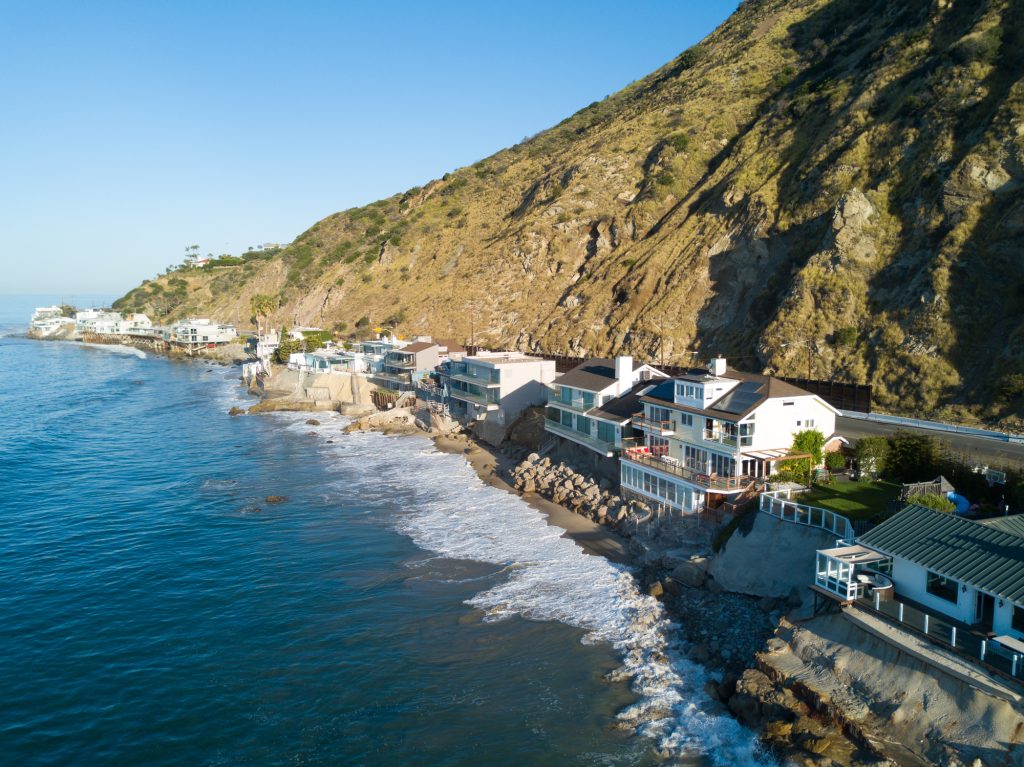
- In Malibu, the Santa Monica Mountains meet the Pacific Ocean along a narrow coastal corridor. Oceanfront homes, blufftop compounds, and canyon holdings sit minutes apart yet offer fundamentally different relationships with the shoreline.
- In Montecito, properties stretch from coastal areas like Butterfly Beach toward the Santa Ynez Mountains, defined by deep setbacks, mature trees, long private drives, and expansive grounds.
| Feature | Malibu Coastal Enclaves | Montecito Coastal Enclaves |
|---|---|---|
| Topography | Narrow coastal strip, steep canyons | Broad coastal slope, rolling foothills |
| Primary Value | Direct frontage, dramatic elevation | Usable flat acreage, mature grounds |
| Privacy Mechanism | Coastal bluffs, gate-guarded pockets | Deep setbacks, heritage hedges, walls |
Why does usable acreage matter more than total acreage?
Total acreage alone can be misleading when evaluating coastal holdings. Usable, level land dictates how effectively a property can accommodate lifestyle amenities, privacy buffers, and future improvements.
- Topography: Multiple acres on a steep Malibu hillside offer elevated views but restricted building envelopes. A similar parcel size in Montecito often provides flat, usable space for guest residences, tennis courts, and formal gardens.
- Parcel geometry: A wide, well-proportioned lot offers greater layout flexibility and separation from neighbors than a long, narrow holding.
- Site orientation: The placement of structures, access roads, and natural topography determines how much of the site can be safely and comfortably enjoyed.
How does oceanfront property differ from elevated coastal holdings?
Along the coast, the term “oceanfront” can describe very different properties. One residence may open directly onto the sand, while another sits above the water on a bluff. Some offer direct beach access; others gain wider views, more usable outdoor space, or greater separation through elevation.
A few details can tell much more about the property than the label itself:
- Parcel width: Wider frontage can provide more space between neighboring homes and a broader connection to the shoreline.
- Elevation: Higher vantage points protect ocean views while adding visual privacy from beach visitors.
- Sun and wind exposure: Facing direction dictates daily natural light, wind protection, and outdoor usability.
- Regulatory oversight: Coastal Commission policies and local land-use restrictions govern future expansions on beach and bluff sites.
What defines oceanfront privacy in Malibu?
Privacy across Malibu oceanfront estates can vary considerably depending on where the property sits. Along the beach, the Pacific may be only steps from the house. Farther inland or above PCH, privacy often comes from elevation, acreage, and distance from neighboring homes.
Directly along the water
Beachfront properties along pockets like Carbon Beach, Colony Beach, and Broad Beach offer immediate shoreline interaction. On these parcels, privacy depends on site depth, road setbacks, side-yard buffers, and the distance to public beach access points. Wider parcels allow structure placement that minimizes sightlines from adjacent properties.
A clear example of this layout is 23826 Malibu Road, which I represented co-jointly with Cooper Mount. Sold for $22.5 million in September 2024, this Cape Cod-style beachfront compound features a main residence flanked by a private front courtyard, a detached guest house, an expansive oceanfront entertainer’s deck, and private stairs to the sand. The property demonstrates how multi-building positioning and wide frontage preserve deep privacy along such a prime coastal strip.
Above the Pacific Coast Highway
Moving inland into the canyons or onto the bluffs of Point Dume and Serra Retreat changes the living environment completely. Larger parcels, broader views, and greater distance from the shoreline can create much more separation than is possible on many beachfront lots.
The tradeoff is direct beach access. In return, some hillside and canyon estates offer room for larger grounds, longer approaches, and greater privacy from both neighboring properties and passing traffic.
How does Montecito deliver scale and private living?
Montecito’s estate market is distinguished by physical scale, historical grounds, and seamless integration between mountain and ocean settings.
Privacy established over time
Many premier Montecito luxury homes derive their security and aesthetic character from established landscaping. Mature oak groves, citrus orchards, old-growth eucalyptus, and stone walls create natural boundaries that take decades to grow.
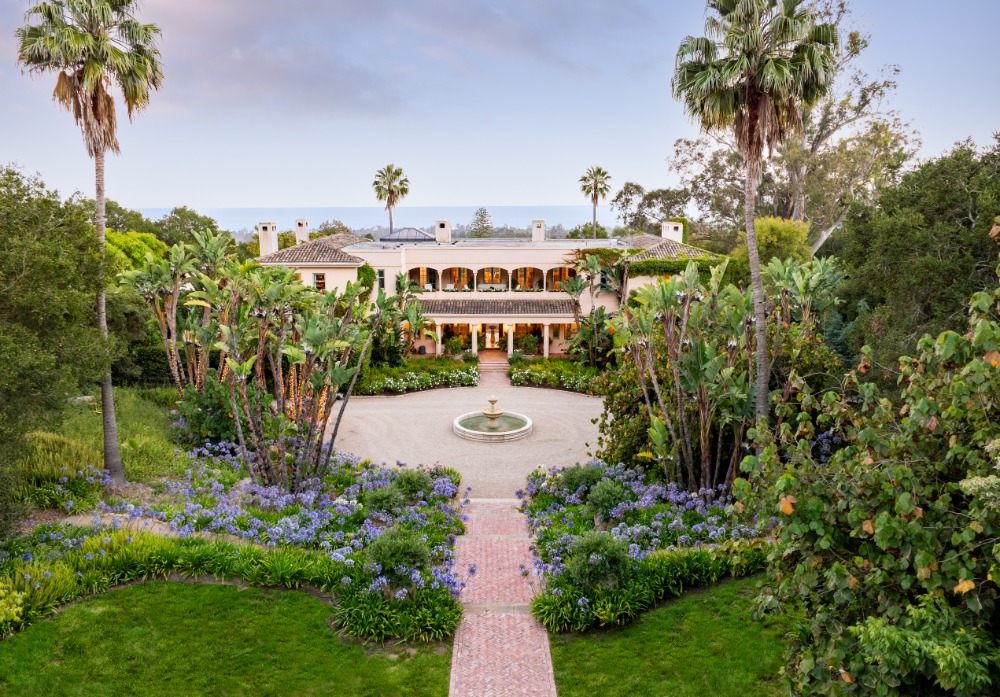
The Far Afield Estate is among the finest of Montecito luxury homes.
Between the mountains and the ocean
Positioned within enclaves like the Golden Quadrangle, Montecito holdings feature diverse microclimates and dual sightlines. The balance of usable acreage, architectural history, and multi-building capacity secures long-term asset appeal.
A prime example of this enduring value is the Far Afield Estate, a 10.5-acre landmark in the Golden Quadrangle featuring historic Francis T. Underhill architecture and grounds designed by Lockwood de Forest. Though previously offered publicly for $65,000,000, the Far Afield Estate is currently held off-market. Trophy compounds of this caliber illustrate how historic site positioning and irreplaceable grounds anchor generational property value beyond standard market cycles.
What to look for beyond the current design
Surface finishes and interior decor change over time, but underlying land traits endure. Focus on these structural elements during evaluation:
- Pay attention to the site itself. Broad ocean frontage, usable acreage, protected views, mature grounds, and meaningful separation from neighboring properties can continue to define an estate long after the interiors have changed.
- Look at how the residence sits on the land. A well-positioned home should make the most of its views, outdoor spaces, privacy, and natural surroundings rather than simply occupying a large parcel.
- Consider improvements that would be difficult to add later. A well-sited guest house, pool, tennis court, long private drive, or mature privacy landscaping may carry added significance on a coastal property where future development can be limited.
- Distinguish architectural pedigree from current design. A notable architect or historically significant residence can add lasting interest, but that value is strongest when the architecture also works with the setting, views, and grounds.
- Look for flexibility over time. Properties with adaptable guest spaces, generous outdoor areas, and well-planned grounds can continue to serve changing needs without requiring the estate to be fundamentally reworked.
Frequently asked questions
-
Is direct ocean frontage always preferable when it comes to Malibu oceanfront estates?
Not always. Direct frontage offers an immediacy that is difficult to reproduce, but elevation, privacy, usable acreage, outdoor space, access, and exposure also influence the quality of a coastal estate. -
How much value does mature landscaping add to a coastal property?
Established landscaping can be a significant part of both privacy and character. Mature trees, hedges, gardens, and screening may have taken decades to reach their current scale, making them more difficult to recreate than a renovated interior or newly designed outdoor space. -
Does future development potential matter if there are no plans to renovate?
It can. Understanding what may be expanded, rebuilt, or added helps clarify the long-term flexibility of the property. Just as important is knowing where development is restricted, especially on coastal, hillside, or environmentally sensitive sites.
Partner with proven coastal real estate expertise
Malibu and Montecito offer very different coastal settings, but the finest estates share qualities and features that are difficult to recreate. Drawing on decades of experience in Beverly Hills luxury real estate and California’s coastal markets, my role is to help clients recognize those distinctions and understand what gives a property lasting appeal.
To explore Malibu oceanfront estates, Montecito luxury homes, or current opportunities in the Beverly Hills luxury real estate market, contact me, Joyce Rey, at 310.291.6646 or send a direct inquiry here.


Browse our latest news and updates below